
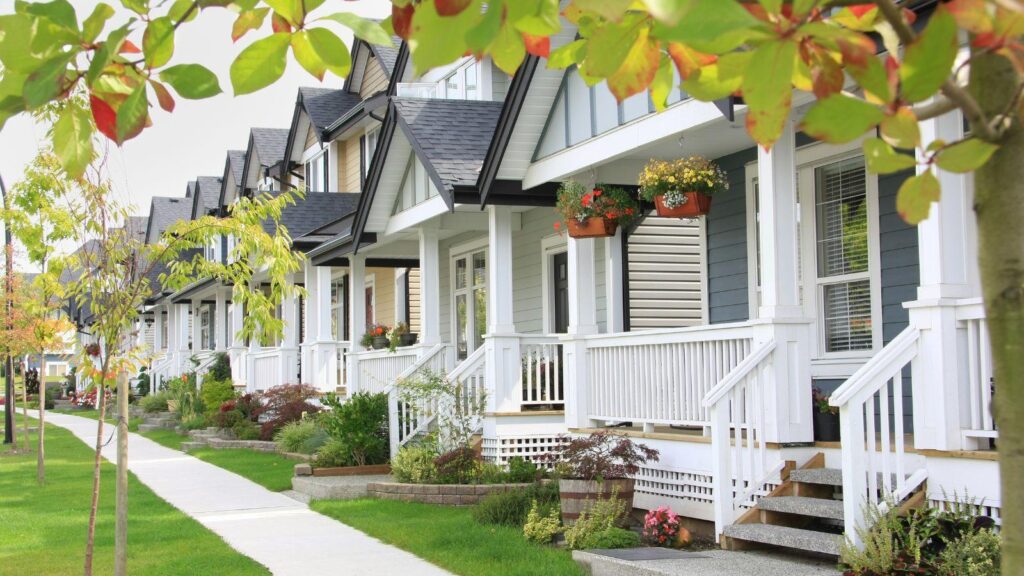
Some neighborhoods feel like a collection of individual houses. Others feel like something more cohesive, a place with its own rhythm, its own institutions, a sense that people belong to it rather than just live in it. The difference usually isn’t luck or aesthetics. It tends to trace back to something older: a shared history that gave the place its identity before most of today’s residents ever arrived.
That history doesn’t have to be ancient or dramatic to matter. Sometimes it’s as specific as a wave of immigrants who settled a particular stretch of waterfront for a practical reason, and simply never left, building institutions and traditions that outlasted the original circumstances that brought them there.
Why Shared History Creates Belonging
Researchers studying neighborhood cohesion have found that shared identity functions as a genuine platform for trust and cooperation among residents, not just a nice feeling. A review published in the journal Frontiers in Psychology describes how social identification with a local community increases residents’ sense of personal control and wellbeing, and that this shared identity creates a foundation for trust and cohesion that helps neighbors function as a group rather than a collection of strangers. In plain terms: when people feel connected to something bigger than their own address, they tend to act more like neighbors and less like people who happen to live near each other.
That shared identity has to come from somewhere. In a lot of neighborhoods, it comes from a specific historical origin, immigrants who settled an area for a particular reason, an industry that shaped daily life for generations, traditions that got passed down long after the original reason for them faded. Without that anchor, a neighborhood can still be pleasant to live in, but it tends to lack the specific texture that makes residents feel like they’re part of something with a story, rather than just occupying square footage.
A Neighborhood Built by People Who Came From Somewhere Else
Anyone researching Ballard as a place to live is looking at one of Seattle’s most historically distinct neighborhoods, not just another waterfront zip code. That identity goes back to the 1880s, when Norwegian, Swedish, Danish, Finnish, and Icelandic immigrants settled the area in large numbers, drawn by opportunities in fishing, logging, and shipbuilding along the waterfront. By the early 20th century, the neighborhood was so thoroughly Scandinavian that locals nicknamed it “Snoose Junction,” a reference to the snus, a Scandinavian smokeless tobacco, that many residents used.
That wasn’t a passing phase. Immigrant communities built churches, fraternal organizations like the Sons of Norway, cooperative stores, and social clubs that gave the neighborhood real institutional weight, not just a shared background, but shared places to actually gather. Those institutions did the slow work of turning a group of individual immigrant families into something that functioned as an actual community, with its own internal support systems long before any city agency or developer had a hand in shaping the area.
How That History Still Shows Up Today
What makes heritage like this matter beyond a historical footnote is whether it’s still visible in daily life decades later. In Ballard, it clearly is. The National Nordic Museum, which moved into a purpose-built home in 2018, sits in the neighborhood specifically because of this history, not despite the neighborhood having moved on from it. The Sons of Norway Leif Erikson Lodge is still active. Ballard hosts the largest Syttende Mai, Norwegian Constitution Day, celebration outside of Norway itself every May 17. Fishermen’s Terminal, home base for part of the North Pacific fishing fleet, still operates a few blocks from where Scandinavian fishermen first worked the same waterfront over a century ago.
Living in Ballard today means living inside a neighborhood that actively maintains an identity built by people who arrived with almost nothing but a specific set of skills and a reason to be near the water. That’s a meaningfully different kind of place than a neighborhood that simply grew up around convenient transit access or a good school district, with no particular story behind why it exists where it does.
Why Heritage-Rooted Neighborhoods Tend to Stay Tight-Knit Even as They Change
Neighborhoods with this kind of history don’t stay frozen in time, and Ballard hasn’t either, newer residents, new construction, and new businesses have all arrived over the decades. What tends to persist is the infrastructure that heritage built: the institutions, the annual traditions, the physical landmarks that give newcomers something specific to plug into rather than a blank slate.
That’s arguably more valuable to a new resident than it sounds. A newcomer moving into a neighborhood with no particular identity has to build a sense of belonging entirely from scratch. A newcomer moving into a neighborhood like Ballard inherits a ready-made calendar of traditions, institutions, and gathering places that took generations to build, and can start participating in that identity almost immediately rather than waiting years for one to form.
The Takeaway
None of this means heritage alone guarantees a tight-knit community, plenty of neighborhoods with rich histories have lost that cohesion over time as institutions closed or traditions faded. But where that heritage has been actively maintained, through museums, active social organizations, and traditions people still show up for, it tends to produce something genuinely harder to manufacture in a newer development: a neighborhood that already knows what it is, and is willing to let new residents become part of that story rather than starting one from nothing. That’s not a small distinction. It’s the difference between moving into a place and moving into a story that was already in progress, one with room enough to write yourself into it.